$ 500-600 per hour
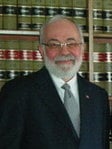
John R Williams
About John
Biography
A lawyer for more than forty years, John Williams started his legal career as a lobbyist for Aetna Life & Casualty in Hartford in 1967, following several years working in staff positions in the United States Senate. His introduction to litigation came when company lawyers were asked to donate time to pro bono publico activities of the Hartford County Bar. His first criminal client was Preston ("The Real Thing") Holloway, a man sentenced to life in prison in the 1950s for "use of heroin" in the days before the Fourth Amendment prohibition on illegal searches and seizures was applied to the states. Obtaining his release from prison and a job in the Aetna cafeteria, Williams was quickly disillusioned with corporate liberalism when a Senior Vice President fired Holloway upon learning that thirty years earlier he had suffered from a venereal disease. Forced to return to a life on the streets, he was promptly arrested on other charges and returned to prison.
Leaving Aetna for more useful activity, Williams became chief criminal attorney in the Hill Neighborhood Law Office of the New Haven Legal Assistance Association in the summer of 1969. His first major case was as one of the defense attorneys in the murder prosecution of the local and national leadership of the Black Panther Party, the so-called New Haven Nine. After their acquittal in the summer of 1971, Williams joined Catherine Roraback and Michael Avery, two other Black Panther Party lawyers, in forming New Haven's first public interest law firm. That firm continues today under the name John R. Williams and Associates, LLC.
John Williams is best known as a pioneer in the field of police misconduct litigation. Since 1971, he and his firm have filed most of the police misconduct suits litigated in the federal court in Connecticut. He and his associates have argued many of the Section 1983 appeals decided by the United States Court of Appeals for the Second Circuit in the years since then, and his name and the names of his associates appear on many of the important Second Circuit decisions in this field. He writes and lectures extensively in the area.
His notable Section 1983 cases include Porter v. Nussle, 534 U.S. 516 (2002) (Prison Litigation Reform Act); Liscio v. Warren, 901 F.2d 274 (2d Cir. 1990) (medical treatment of prisoners); Cartier v. Lussier, 955 F.2d 841 (2d Cir. 1992) (misrepresentations in arrest warrant applications); Mozzochi v. Borden, 959 F.2d 1174 (2d Cir. 1992) (release-dismissal agreements); Dobosz v. Walsh, 892 F.2d 1135 (2d Cir. 1989) (police whistleblowers); Musso v. Hourigan, 836 F.2d 736 (2d Cir. 1988) (free speech at public meetings); Sousa v. Roque, 578 F.3d 164 (2d Cir. 2009) (free speech rights of public employees are not limited by the motivations of the speaker); Reed v. Town of Branford, 949 F. Supp. 87 (D. Conn. 1996) (age discrimination as a &1983 violation and harassment as a substantive due process violation); Gavlak v. Town of Somers, 267 F. Sup. 2d 214 (D. Conn. 2003) (rights of property owners in zoning disputes); In re Alexander V., 223 Conn. 557, 613 A.2d 780 (1992) (familial relationships as a fundamental constitutional right); Warren v. Dwyer, 906 F.2d 70 (2d Cir. 1990) (submission of qualified immunity question to jury); Gagnon v. Ball, 696 F.2d 17 (2d Cir. 1982) (police bystander liability); Pitchell v. Callan, 13 F.3d 545 (2d Cir. 1994) (color of law); Miller v. Lovett, 879 F.2d 1066 (2d Cir. 1989) (pendent jurisdiction); Dodd v. City of Norwich, 827 F.2d 1 (2d Cir. 1987) (municipal liability); Pouncey v. Ryan, 396 F. Supp. 126 (D. Conn. 1975) (Newman, J.) (collateral estoppel effect of prior conviction); O'Neill v. Krzeminski, 839 F.2d 9 (2d Cir. 1988) (standard for punitive damages); and Ruggiero v. Krzeminski, 928 F.2d 558 (2d Cir. 1991) (opportunity cost as a factor in attorney fee awards).
He also is an active criminal practitioner. His celebrated cases include the Lorne Acquin mass murder case in Prospect, Connecticut, in 1977 which remains the largest mass murder case ever prosecuted in the State of Connecticut. He represented members of the Black Panther Party in the so-called "New Haven Nine" prosecutions between 1969 and 1971, members of the Black Liberation Army, Los Macheteros, and other controversial cases. He has argued countless appeals in the Connecticut Supreme Court in both criminal law and other areas of the law. He has contributed to the expansion of rights for criminal defendants under the state constitution, going beyond the protections afforded by the federal Bill of Rights. State v. Joyce, 229 Conn. 10, 639 A.2d 1007 (1994). For several interesting weeks in 1976, he succeeded in decriminalizing both the possession and the sale of marijuana in Connecticut until an astonished Connecticut Supreme Court overturned the lower court's ruling. (The lower court judge later was himself appointed to the Supreme Court.) State v. Anonymous (1976-3), 32 Conn. Supp. 324, 355 A.2d 729 (1976) (Berdon, J.), reversed State v. Rao, 171 Conn. 600, 370 A.2d 1310 (1976).
He takes particular pride in his efforts to reshape and democratize the Connecticut jury system. In 1976, he was the first Connecticut lawyer to challenge in federal court the then common prosecutorial practice of using "peremptory challenges" to remove minorities from juries in criminal cases. United States v. Newman, 549 F.2d 240 (2d Cir. 1977).
Throughout the entire decade of the 1970s and into the 1980s, in a series of state and federal court cases, he fought many court battles to change the method by which Connecticut juries were selected, a complex legacy of the colonial era which produced juries that were disproportionately white, male, middle-aged and suburban. Finally, in 1986, in the companion cases of Alston v. Manson and Haskins v. Manson, 791 F.2d 255 (2d Cir. 1986), he persuaded the United States Court of Appeals to strike down the Connecticut system.
In the cases of State v. Anthony, 172 Conn. 172, 374 A.2d 156 (1976); and State v. Roberson, 173 Conn. 102, 376 A.2d 1087 (1977); he persuaded the Connecticut Supreme Court to prohibit trial court judges from limiting the time lawyers could question prospective jurors during the jury selection process, thereby reducing the danger of biased jurors infecting trials with racial and other prejudices.
One of his most celebrated cases was the New Haven Wiretap Litigation class action in the federal court in Connecticut running from 1977 to 1984, in which he represented more than 1,000 people from all walks of life and strata of society who had been victimized by an unlawful wiretap operation conducted jointly by local police and FBI agents for more than a decade. This litigation resulted in a settlement of over $1 million, led to significant reforms in the area of personal privacy, and generated a voluminous history of illegal police surveillance of the Black Panther Party which is now archived at Yale's Beineke Library.
He has worked extensively, and sometimes successfully, in cases involving the "false confession syndrome," in which innocent people have confessed to crimes they did not commit. E.g., Miller v. Angliker, 848 F.2d 1312 (2d Cir.), cert. denied, 488 U.S. 890 (1988); State v. LaPointe, 237 Conn. 694, 678 A.2d 942 (1996). He was the first lawyer in the United States to win an acquittal in a criminal case on the ground that the ingestion of prozac caused the criminal behavior. State v. DeAngelo, 2000 WL 973104 (Conn. Super. 2000).
Practice Areas
4
Practice Areas
Fees and Rates
Cost
Hourly Rates
Payment Methods
- Cash
- Check
- Credit Card
Looking for an attorney? Avvo can help.

Search our directory
Quickly connect with top attorneys through our legal directory to get help with your legal issue.

Avvo's live chat agents can help coordinate a consultation with a local attorney.
Chat with a live agent who can match you with the right attorney for your legal needs.
Chat withLicenses
Licensed in Connecticut for 58 years
State: Connecticut
Acquired: 1968
Lawyer disciplined by state licensing authority in 2019
Location
John R Williams and Associates, LLC
51 Elm St Ste 409, New Haven, CT, 06510-2049
Gallery

Ad
Transform legal challenges into solutions.
Connect now to review your situation.

John R Williams's Reviews
Avvo Review Score
12 Client Reviews
Filter Avvo Reviews (12)
Refine reviews to match your needs. Use the filters to quickly surface reviews that align with your case or priorities.
Practice Areas
What Clients Mention
Showing 1 - 5 of 12 reviews
Posted by Tom | February 17, 2026 | Hired Attorney
Incompetent Lawyer, gave away my judgement.
At one time Atty Williams may have been a great lawyer. He is NOT one now. He failed to file documents, I had Judgement in my favor and he allowed the Defense Atty to file and bring a closed case back to court. His response to the Judge who literally said she was scratching her head on why he woul...
Posted by anonymous | May 21, 2024 | Hired Attorney
Trust your GUT…he is a SLIMEBALL
Attorney Williams betrayed my trust. I hired him because the prosecutor of New Haven engaged in misconduct and I could not trust that she would protect myself and my children. My ex-spouse was charged with 14 felony charges ranging from rape to strangulation to suffocation. Attorney Williams lied ...
Posted by anonymous | May 14, 2024 | Hired Attorney
Incompetent Attorney
John is very sly, will tell you everything you want to hear and will say he hasn’t lost a case. This man took my case and literally did nothing. He may be too old to perform, forgets many things or he just doesn’t care either way it thievery, an injustice to all.
Posted by Sophie | June 01, 2022
Helped me without any reason in the world.
My husband was being railroaded in a 3 year long neglected CHRO employment discrimination case. I called around and Mr. Williams was one of few willing to speak to me over the phone without any payment. He continued to look over the case and answered my questions via email. He agreed to take the case...
Posted by anonymous | January 06, 2022 | Hired Attorney
thief and liar surrepitious
never read the complaint did not explore the evidence that i presented to him was dis-bared several times for invidious behavior. this guy is out for retainers only never communicates and does not have qualified associates
John R Williams's Lawyer Endorsements
No Endorsement Data Available Yet
This attorney hasn't received any attorney endorsements recently on Avvo.
No Endorsement Data Available Yet
This attorney hasn't created any attorney endorsements recently on Avvo.
Experience
Professional misconduct
This lawyer was disciplined by a state licensing authority in 2019.
Reprimand issued in CT, 2019
updated on 08/19/2019A reprimand is an order from the Statewide Grievance Committee after it has found that an attorney has engaged in ethical misconduct. If an attorney receives more than 3 reprimands in 5 years, a presentment must be filed against the attorney so the Superior Court can decide if more serious discipline should be ordered.
Suspension issued in CT, 2017
updated on 11/28/2017This means the attorney lost his or her license to practice law for a period of time. The attorney typically returns to practicing law when the suspension expires.
Honors
2018
AV Rated, Martindale-Hubbell
Work Experience
1980 - 1990
Adjunct Faculty, Yale Law School
Associations
National Association of Criminal Defense Lawyers
Life Member
Connecticut Criminal Defense Lawyers Association
Founding Member
1997 - 1998
Association of Trial Lawyers of AmericaChair, Civil Rights Section
Sample of Legal Cases
Drimal v. Tai, 786 F.3d 219 (2d Cir. 2015)
Suit for unlawful wiretapping by FBI agents remanded for trial.
Sousa v. Roque, 578 F.3d 164 (2d Cir. 2009)
Plaintiff prevailed.
Bhatia v. Debek, 287 Conn. 397, 948 A.2d 1009 (2008)
Plaintiff prevailed.
Lopes v. Farmer, 286 Conn. 384, 944 A.2d 921 (2008)
Plaintiff prevailed.
Doe ex rel. A.N. v. East Haven Board of Education, 430 F. Supp. 2d 54 (D. Conn.), aff'd 200 Fed. Appx. 46 (2d Cir. 2006)
Plaintiff prevailed.
DeLeo v. Nusbaum, 263 Conn. 588, 821 A.2d 744 (2003)
Plaintiff prevailed
Porter v. Nussle, 534 U.S. 516 (2002)
Second Circuit ruling reversed
Zavatsky v. Anderson, 130 F. Supp. 2d 349 (D. Conn. 2001)
Plaintiff prevailed.
State v. DeAngelo, 2000 WL 973104 (Conn. Super. 2000)
Defendant acquitted on grounds of ingestion of prescription medication.
Bell v. Board of Education, 55 Conn. App. 400, 739 A.2d 321 (1999)
Plaintiffs prevailed.1
Drumm v. Brown, 245 Conn. 657, 716 A.2d 50 (1998)
Plaintiff prevailed.
Delahunty v. Massachusetts Mutual Life Ins. Co., 236 Conn. 582, 674 A.2d 1290 (1996)
Plaintiff prevailed.
DeLaurentis v. City of New Haven, 220 Conn. 225, 597 A.2d 807 (1991)
Plaintiff prevailed.
Ruggiero v. Krzeminski, 928 F.2d 558 (2d Cir. 1991)
Plaintiff prevailed
Dobosz v. Walsh, 892 F.2d 1135 (2d Cir. 1989)
Substantial damages award to plaintiff affirmed.
Miller v. Angliker, 848 F.2d 1312 (2d Cir. 1988)
Prisoner released from custody.
Haskins v. Manson, 791 F.2d 255 (2d Cir. 1986)
Conviction vacated.
Gagnon v. Ball, 696 F.2d 17 (2d Cir. 1982)
Plaintiff prevailed
Education
1967
Georgetown University Law Center
JD - Juris Doctor
1963
Harvard College
A.B.
Publications
2004
2003
Suffolk Journal of Trial & Appellate Advocacy
Beyone Police Misconduct and False Arrest: Expanding the Scope of 42 USC 1983 Litigation
2000
Touro Law Review
Police Misconduct - A Plaintiff's Point of View
1996
Convicting the Innocent
The Ben Miller Frame-Up
1988
Civil Rights Litigation and Attorney Fees
A Practitioner's Guide to Representing Plaintiffs in Section 1983 Litigation
1968
Connecticut Law Review
The Constitutionality of Basic Protection
Languages
English
Spanish
Activity
Legal Answers